
Waterless vs Ultrasonic Diffuser
Waterless vs ultrasonic diffuser: the short answer is that a waterless diffuser turns neat oil into a fine, invisible vapour with pressurised air, so the scent is stronger and reaches further, while an ultrasonic diffuser vibrates a few drops of oil in a tank of water into a soft, visible mist that is gentler, cheaper to run and adds a little moisture to the air. Pick ultrasonic for a bedroom, nursery or desk where a light scent and a glow are enough. Pick waterless for a living room, open-plan space or anywhere you want the fragrance to be noticed without topping up water every day.
This guide explains how each type works, then compares them on scent strength, oil use and running cost, noise, humidity, cleaning, which oils you can use, room size and pets, using the real figures from the diffusers we list. There is a side-by-side table, a quick diffuser finder and a "which should you buy" section at the end.
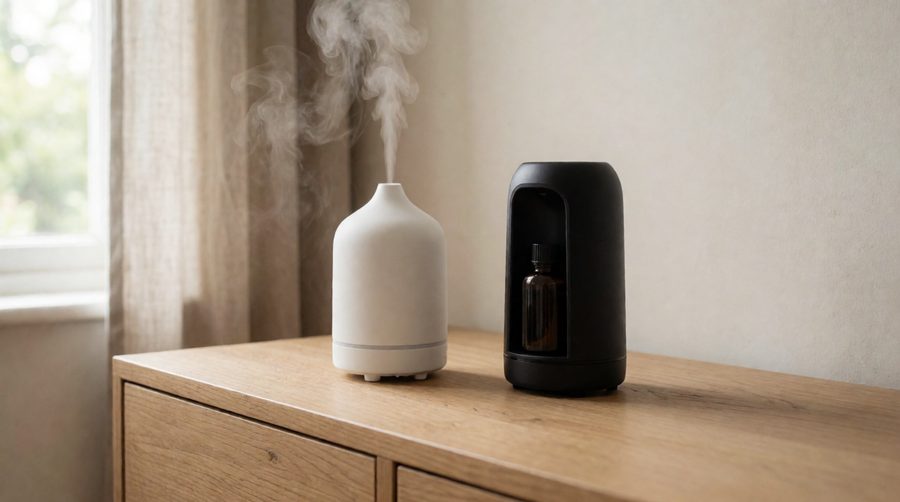
How an ultrasonic diffuser works
An ultrasonic diffuser has a small water tank, usually 100-500ml, with a ceramic disc at the bottom. You fill the tank with tap water, add a few drops of essential or fragrance oil, and the disc vibrates more than a million times a second. That breaks the water and oil into a cool mist, which a small fan pushes out of the top. There is no heat involved, which is why they are also sold as cool mist humidifiers.
The mist you see is almost all water, with the oil carried along in it. That is the reason the scent is soft: a few drops are spread through several hundred millilitres of water. Many diffusers in our range also have 7-colour mood lights, a timer and an automatic shut-off when the tank runs dry. The ASAKUKI 300ml, for example, has 1, 2 and 3-hour timers plus an intermittent mode, and switches itself off when the water is gone.
How a waterless diffuser works
A waterless diffuser uses no water at all. A small air pump forces air across the top of a narrow tube dipped into the oil bottle. The fast-moving air draws the oil up and shatters it into tiny droplets, so small that you can't see them, and they hang in the air for longer than a heavy mist would. Again there is no heat, so the oil is not "cooked" and smells as it should.
You will see two names for this kind of machine:
- Nebulising diffusers are the traditional glass-and-wood style. Oil drips straight into a glass nozzle, and they run on pure essential oils. The Solum Nox Vitis in our nebulizing diffusers range is a good example: a glass reservoir on a wooden base, rated for up to 40 m².
- Cold-air diffusers (or scent air machines) are the boxier diffusers that hotels and shops use. The oil sits in a sealed bottle, and the diffuser puffs scent out in short cycles. The Jcloud P300 ships set to 10 seconds on and 110 seconds off, which is why a 300ml bottle lasts around a month. Browse these in our cold air diffusers.
Both are waterless and work on the same principle; the cold-air diffusers just add a fan, a timer and a bigger bottle. Everything we list without a water tank is gathered in our waterless diffusers collection.
Not sure which you need? Try the diffuser finder
Answer three quick questions about where it will go, whether you mind topping up water and whether you want app control, and the finder points you to the right type of diffuser.
Waterless vs ultrasonic diffuser: side-by-side comparison
The figures below come from the specs of real diffusers in our feed, not from a brochure. Coverage claims on listings are generous, so treat them as a ceiling rather than a promise.
| Ultrasonic diffuser | Waterless diffuser | |
|---|---|---|
| How it works | Vibrating disc turns water and oil into mist | Pressurised air turns neat oil into a fine vapour |
| What goes in | Tap water plus 3-10 drops of oil | Neat oil from a bottle, no water |
| Scent strength | Light to moderate | Strong and adjustable |
| Coverage in our range | About 300-350 sq ft (ZmarKraft 200ml, Y&o glass) | 500 sq ft (Jcloud A-P353) to 3,500 sq ft (Aromadd 600ml) |
| Oil use | A few drops per fill | Under 0.5ml an hour (Jcloud P300) up to 4-6ml an hour on commercial diffusers |
| Run time | 6-15 hours per fill, then refill the water | Weeks to months per bottle on a cycle timer |
| Quoted noise | Under 20-25dB (Diffuserlove, ASAKUKI, Jpord) | "Whisper quiet" at home; 35-45dB for commercial diffusers |
| Humidity | Adds a little | None |
| Visible mist and light | Yes, most have colour lights | No mist; few have lights |
| Cleaning | Empty and dry daily, clean every few days | Wipe the nozzle; clean weekly to monthly |
| Power | About 10W (ASAKUKI, ZmarKraft) | 1.6W (Jcloud A-P353) to 12W (Jcloud P300) |
| Upfront price | Lower | Higher |
| Best for | Bedrooms, nurseries, desks, mood lighting | Living rooms, open-plan spaces, hallways, businesses |
Scent strength: which smells stronger?
A waterless diffuser wins on strength every time. It puts neat oil into the air, so a living room smells of the fragrance within minutes, and you turn it down with the intensity setting or a longer pause between puffs. Most waterless cold-air diffusers have several levels; the Jcloud smart diffuser has 9 grades plus a custom setting.
An ultrasonic diffuser gives a softer scent that stays closer to the diffuser. You can add a couple more drops, but the oil is still diluted in water, so a large room never fills the way it does with a waterless diffuser. That gentleness is the point for many people: in a small bedroom or next to a desk, a strong scent quickly becomes too much.
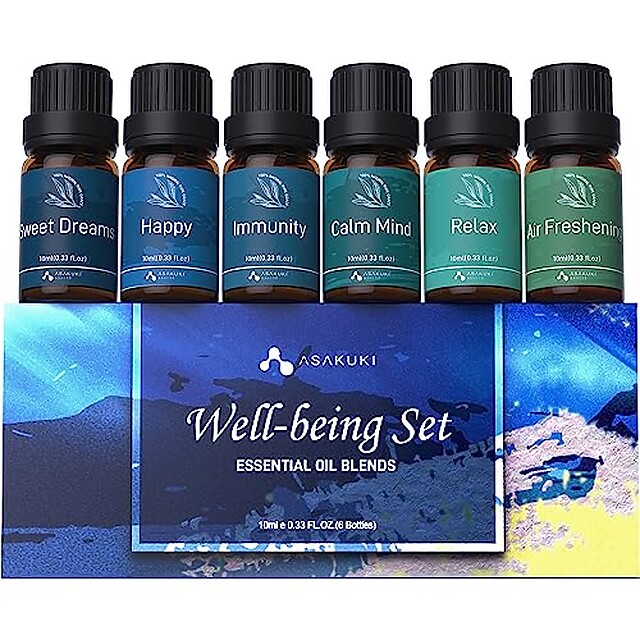
The oil itself matters as much as the machine. A cheap, thin fragrance will be faint in either diffuser, so it pays to buy decent diffuser fragrance oils or a good essential oil set.
Oil use and running cost
Ultrasonic: cheap to run
You only use a few drops per tank. The Jpord 500ml listing suggests 3-5 drops for a full tank, which runs for up to 15 hours. A 10ml bottle of essential oil holds roughly 200 drops, so it goes a long way. The extra cost is a little electricity and, if you live in a hard water area, the time spent descaling.
Waterless: uses more oil, but gives more scent
A waterless diffuser burns through neat oil, so you will buy refills more often. How fast depends on the diffuser and the settings: the Jcloud P300 is quoted at under 0.5ml an hour and around 30 days from its 300ml bottle at the highest grade, while commercial diffusers such as the CONTIA L065 use 4-6ml an hour while they spray. Waterless diffusers also cost more to buy. In return you get far more scent per room, and you can cut oil use sharply with a longer pause between bursts or a timer that only runs when you are home.
Some branded diffusers only take their own bottles. The AromaTech AroMini BT Plus, for example, uses screw-in 60ml AromaTech bottles only, so check this before you buy, as it decides your running cost for years.
Noise: which is quieter?
Ultrasonic diffusers are usually the quietest type of diffuser. Makers quote 20dB or less for the Diffuserlove 500ml, under 23dB for the ASAKUKI 500ml and under 25dB for the Jpord, roughly the level of a quiet whisper. You may hear a faint bubbling as the water level drops.
Waterless diffusers have an air pump, which gives a low hum, and a short hiss each time they puff. Home diffusers are sold as "whisper quiet", but few publish a decibel figure. Commercial diffusers that do quote one sit at 35-45dB, fine for a shop but noticeable in a silent bedroom. If noise matters most, look at our quiet diffusers, and in a bedroom use a timer so a waterless diffuser stops once you are asleep.
Humidity and dry air
Ultrasonic diffusers add some moisture, but not much. A 500ml tank that lasts 10 hours puts out about 50ml of water an hour, which helps a little with dry air near the diffuser in winter but won't replace a proper humidifier. Waterless diffusers add none, which is a plus in damp UK homes where condensation and mould are already a problem.
There is one catch with water. Tap water contains minerals, and an ultrasonic diffuser sends them into the air along with the mist, which can leave a fine "white dust" on nearby furniture. The US Environmental Protection Agency's humidifier fact sheet notes that ultrasonic units can disperse minerals and microorganisms from their tanks, and suggests distilled water if white dust is a problem. In hard water areas such as London and the South East it is worth doing, and your water supplier's website will tell you how hard the water is at your postcode.
Cleaning and maintenance
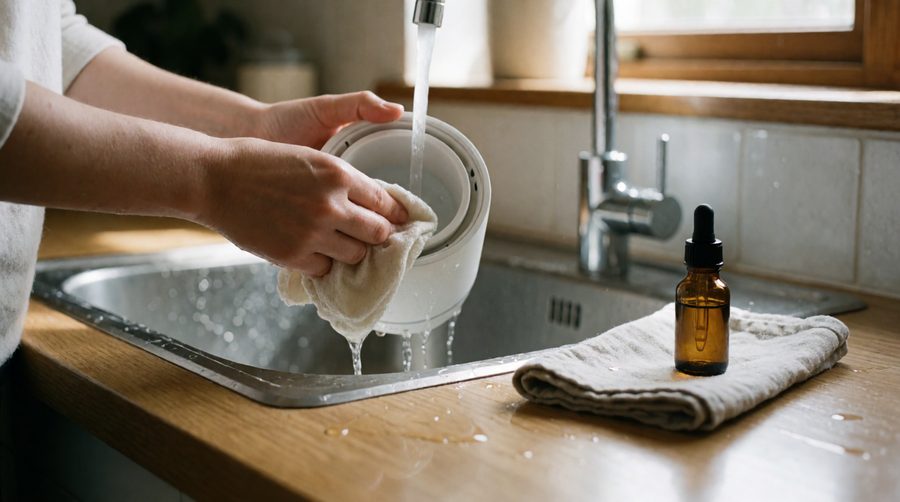
Ultrasonic diffusers
Standing water is the weak point. Empty the tank after each use and let it dry, rather than topping up old water. Every few days, wipe the tank and the ceramic disc with a soft cloth or cotton bud; the EPA advises cleaning portable humidifiers every third day. A splash of white vinegar shifts limescale. Never put the base under a running tap, as the electronics sit underneath.
Waterless diffusers
No tank means a waterless diffuser is far less work. Wipe the nozzle when you change the bottle so oil doesn't build up, and run a little isopropyl alcohol through glass nebulisers when you switch scents; the Solum Nox listing suggests a monthly clean. Cold-air diffusers with sealed bottles need the least: the Jcloud P300 listing recommends a weekly clean. Thick, sticky oils such as vetiver, sandalwood, patchouli and myrrh are known to clog nebuliser nozzles, so mix them with a thinner oil or check the manual first.
Which oils work in each?
- Ultrasonic: pure essential oils and water-soluble diffuser fragrance oils. Don't use carrier oils (such as almond or coconut), perfume or reed diffuser liquid. Some makers warn that strong citrus oils can mark plastic tanks over time, so rinse after using them.
- Waterless: pure essential oils, or fragrance oils made for cold-air or "waterless" machines, which are thinner so they atomise cleanly. Never add water or carrier oil. Check whether your diffuser takes any oil or only its own branded bottles.
Hotel-style scents such as white tea, fig and amber are sold mainly for waterless diffusers, while most essential oil gift sets come in 10ml bottles that suit ultrasonic diffusers best.

Room size: which covers more space?
Waterless diffusers cover far more ground. In our range, the ultrasonic diffusers are rated for around 300-350 sq ft, while waterless diffusers start at 500 sq ft for the plug-in Jcloud A-P353 and reach 2,000 sq ft for the Jcloud P300 and 3,500 sq ft for the Aromadd 600ml. For a single bedroom or study, a small room diffuser with a water tank is plenty. For a living room, a waterless diffuser or a large-tank ultrasonic from our living room diffusers works. Open-plan spaces and whole floors need a large room diffuser, and businesses usually go for an HVAC scent diffuser that feeds scent through the ducts.
Work out your floor area first; our guide to what size diffuser do I need has a room size calculator and a room-by-room chart.
Pets, children and safety
Neither type uses heat, and most switch off automatically, which makes both safer than candles or oil burners. The real question with pets is the oil, not the machine. Cats Protection says essential oils can be toxic to cats through inhalation as well as skin contact, lists oils such as lavender, citrus, eucalyptus, peppermint, tea tree and ylang ylang, and advises that ultrasonic and nebulising diffusers are avoided in homes with cats. A waterless diffuser puts more oil into the air than an ultrasonic diffuser, so take extra care with it. If you have cats, a scent-free room they can retreat to is essential, and a "pet safe" label on a listing is the seller's claim, not a vet's.
For anyone with asthma or a lung condition, start on the lowest setting, keep the room ventilated and read Asthma + Lung UK's advice on scented products. Keep ultrasonic diffusers on a mat or tray, as mist can mark polished wood, and keep oil bottles out of children's reach.
Which should you buy?
Choose an ultrasonic diffuser if...
- It is for a bedroom, nursery, study or desk and you want a light scent.
- You like the visible mist and a soft coloured light.
- You want the lowest upfront and running cost, and you use small 10ml essential oils.
- You don't mind emptying and rinsing a tank every day or two.
Choose a waterless diffuser if...
- You want to scent a living room, open-plan space, hallway or several rooms.
- You want a stronger, truer scent you can turn up or down.
- You would rather not deal with water, limescale or white dust.
- You want scheduling from an app: many waterless diffusers are also smart diffusers.
Many homes end up with both: an ultrasonic diffuser in the bedroom and a waterless diffuser in the living room. And if you would rather have no power, water or settings at all, a reed diffuser is the simplest of the three.
FAQs
Is a waterless diffuser better than an ultrasonic one?
It is better for strong scent and large rooms, with no tank to clean. An ultrasonic diffuser is better for small rooms, a gentle scent, mood lighting and a lower price. Neither is better for everyone.
Do waterless diffusers use more oil?
Yes, because a waterless diffuser uses neat oil rather than a few drops in water. Running a waterless diffuser on a cycle (for example 10 seconds on, 110 seconds off) and a timer keeps oil use down; the Jcloud P300 is quoted at under 0.5ml an hour.
Can I use fragrance oil in an ultrasonic diffuser?
Yes, as long as it is sold for diffusers. Avoid perfume, reed diffuser liquid and anything mixed with carrier oil, which can coat the ceramic disc.
Can I put water in a waterless diffuser?
No. Water damages the pump and nozzle and stops it working. Use only pure essential oils or oils made for waterless diffusers.
Which is quieter, waterless or ultrasonic?
Ultrasonic diffusers are usually quieter, with makers quoting 20-25dB. Waterless diffusers have a low pump hum and a soft hiss as they puff, which some people notice in a silent bedroom.
Are cold-air and nebulising diffusers the same thing?
Both are waterless and use pressurised air to turn neat oil into vapour. "Nebulising" usually means the glass-and-wood style that runs on essential oils, while "cold-air" usually means a scent diffuser with a sealed bottle, a fan and a cycle timer.
Do ultrasonic diffusers help with dry air?
A little. They add moisture near the diffuser, but a 500ml tank only releases about 50ml an hour, so for very dry air a dedicated humidifier does far more.