Our product rankings are based on analysis of thousands of customer reviews, brand reputation, pricing trends, and popularity data. They represent our honest opinion and are intended as a helpful starting point for your research. Some links on this site are affiliate links — if you buy through them, we may earn a small commission at no extra cost to you. This helps us keep the site free and up to date.
HVAC stands for heating, ventilation and air conditioning. An HVAC scent diffuser is a waterless fragrance machine with an outlet that connects, through a thin tube, to the ductwork of that system. Instead of scenting the air around the unit, it feeds a dry fragrance mist into the moving air, and the ducts carry it to every room with a vent.
Inside, almost all of them use cold-air diffusion (also called nebulising or two-fluid atomisation). A small air pump forces neat oil through an atomiser and breaks it into droplets fine enough to float rather than settle. There is no water and no heat, so the oil is not diluted, the air in the ducts stays dry, and the fragrance smells as it was blended. The same technology is used in our cold air diffusers and other waterless diffusers; an HVAC model simply adds the duct connection, a bigger oil bottle and a timer built for long, unattended schedules.
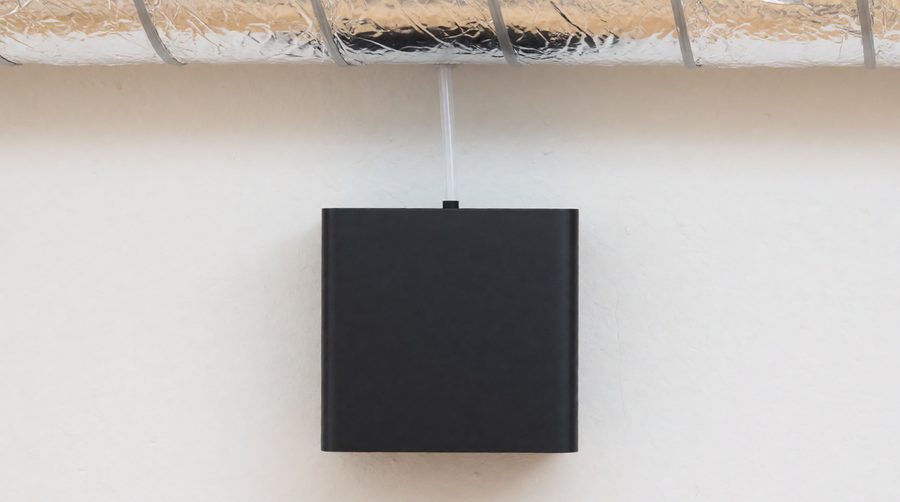
This is the question US-focused guides skip. In America most homes have ducted central air. In the UK, research reported in The Conversation puts the share of homes with air conditioning at only about 3%, against 88% in the US, and most UK air con is wall-mounted split units with no ducts at all. The typical British home is heated by a boiler and radiators, which move no air, so there is nothing for a diffuser to plug into.
So is an HVAC scent diffuser for home use worth it here? Only if your building has one of these:
Ventilation in new homes in England is set by Approved Document F of the Building Regulations, and an MVHR system is designed to hit specific airflow rates. Never block a valve or alter the unit; the scent machine should only add a small tube to a supply duct, and it is worth a quick word with your installer first, both for the warranty and to confirm the filter position.
If you have radiators, don't write the idea off. Every HVAC-ready machine on this page also works as a standalone diffuser, and placed in a hallway at the foot of the stairs a single high-output unit can scent a good part of a smaller house. See the alternatives section below.
| HVAC-connected diffuser | Large standalone diffuser | Several small diffusers | |
|---|---|---|---|
| Needs ducts | Yes (air con, MVHR, warm air or AHU) | No | No |
| Typical rating | 2,000-6,000+ sq ft (186-560+ m²) | 1,000-5,000 sq ft in one open space | Up to a room each |
| Evenness | Very even, room to room | Strong near the unit, fades with distance | Even if one per room |
| What you see | Nothing but the vents | One machine in the room | A device in every room |
| Set-up | Tube into duct, about an hour | Plug in | Plug in, link to one app |
| Best for | Ducted homes, offices, hotels | Open-plan rooms, shops, lobbies | Radiator-heated UK homes |
For the middle column, browse our large room diffuser range; for the last, smart diffusers let you run a whole set from one phone.
Listings mix three units. Sq ft and m² describe floor area (1 m² is 10.76 sq ft). Many Chinese-made machines quote m³, which is floor area multiplied by ceiling height, so divide by about 2.4 m for a modern UK home to get m². Most UK houses are well under 2,000 sq ft (186 m²), so the 4,000-6,000 sq ft machines are aimed at large homes, offices and hotels. Choose by the area the HVAC ducts actually serve, not the whole building, and step up a size if the rooms are closed off or the ducts are long.
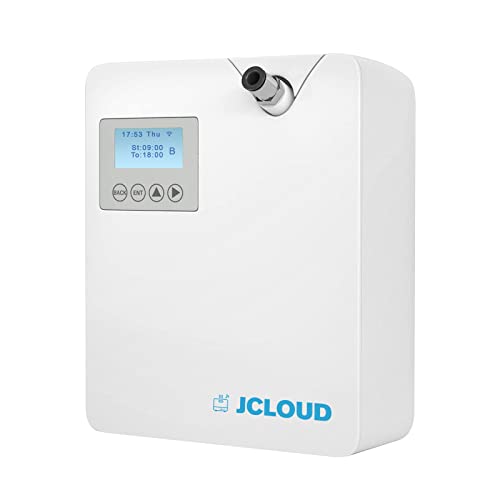
HVAC diffuser bottles range from about 200ml to 1,000ml or more. Bigger means fewer refills, not stronger scent. Running cost depends on how many hours a day you scent and how long each spray burst lasts, so check the bottle size against the maker's figures: Aroma360 quotes roughly 200ml a month at medium intensity for eight hours a day, and one of the 800ml commercial units in our range states 2-3ml per hour of running. Set a schedule rather than leaving it on 24 hours.
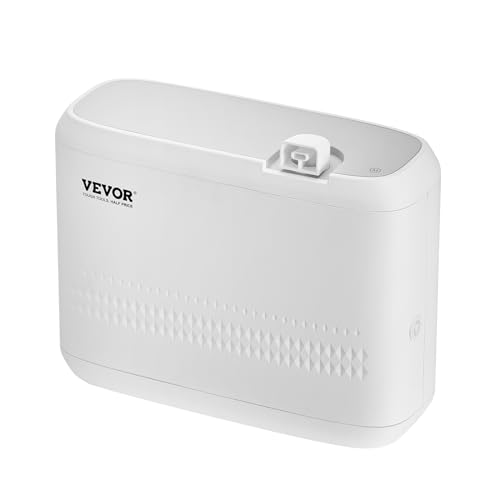
An HVAC diffuser sits out of sight, so the controls do the work. Look for several programmes per day, adjustable work and pause times (for example 10 seconds on, 2 minutes off) and different settings for weekdays and weekends. Many use the Aroma-Link app over Bluetooth or Wi-Fi; Wi-Fi lets you change settings when you are away. Our app controlled diffusers and diffusers with a timer explain the options in detail.
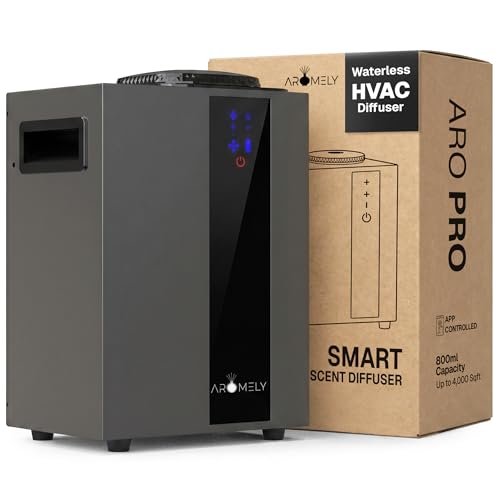
The air pump in an HVAC unit hums. In a plant room or loft that doesn't matter, but if the machine will sit in a utility cupboard off the kitchen, look for a figure under about 40 dB.
Check for an HVAC tube, a duct connector, a wall bracket and ideally a spare atomiser core and a lockable lid. Some sellers sell the HVAC kit separately.

Jcloud, Mxmoonant, Aromaplan and Scentiment all make HVAC-ready machines, and several share the same app. Our Jcloud diffuser and Mxmoonant smart air diffusers pages compare their models.
Most people fit an HVAC diffuser themselves in under an hour, but read the manual for your machine, because brands disagree on details. The usual steps:
Competitors give opposite advice here, so it is worth understanding why. The return duct pulls air back to the unit through the filter. Feed scent in before the filter and the filter catches part of it; feed it into the supply side and the mist goes straight out to the rooms. Most makers now recommend the supply side. With MVHR, only ever use the supply (fresh air) side after the heat exchanger: anything added to the extract side is simply blown outdoors.
A scent machine for air conditioning only works when air is moving through the HVAC ducts. With ducted air con, either set its schedule to match the hours the system runs or use the fan-only mode. MVHR runs continuously, which suits scenting well.

Use pure essential oils or oils sold for cold-air and HVAC diffusers. Avoid carrier oils, thick resins and anything with water or alcohol added, which clog the atomiser. Fresh, clean scents work best through ducts: citrus, white tea, eucalyptus, lavender and light woods. Heavy, sweet fragrances can feel overpowering when every room smells the same. Our essential oil sets are a cheap way to test a few before buying a large bottle, and our hotel scent diffuser guide covers the popular lobby-style blends.
Clean the atomiser every one to two months, or when you change fragrance, with the cleaning method in the manual (usually a short run of isopropyl alcohol through the head). Check the tube connection while you are there.
A whole house scent system puts fragrance into every room at once, which changes the usual advice. With a standalone unit you can keep one room scent-free; with HVAC ducts you cannot. Asthma + Lung UK notes that many everyday scented and cleaning products release volatile organic compounds (VOCs) that can make lung conditions worse, so run it lightly, on a schedule, and turn it off if anyone gets headaches or symptoms.
Cats are especially sensitive to essential oils such as tea tree, peppermint, eucalyptus and citrus. Read Cats Protection on essential oils and the PDSA advice on cats and essential oils before scenting a ducted home with a cat, because there is no room they can retreat to. Unlike candles, cold-air diffusers produce no flame or heat, but keep oil bottles locked or out of reach of children.
Not through the radiators. They heat water, not air, so there are no ducts to carry the scent. You can still run the machine standalone in a hallway or open-plan room.
A cold-air diffuser makes a dry mist, and makers say it leaves no residue when used with suitable oils at sensible settings. Problems come from too high a setting, thick oils or a tube that drips. Check your air con warranty and ask the installer if unsure.
Not easily. Wall-mounted split units recirculate room air and have no duct to connect to. Put a standalone machine near the indoor unit and let its airflow spread the scent.
Yes, on the supply side after the heat exchanger, using a low setting. Check with your installer first, as some manufacturers have warranty conditions about anything added to the ducts.
It depends on area, hours and intensity. As a guide, makers quote anything from a few weeks to a couple of months for a 300-500ml bottle on a daily schedule. Running fewer hours makes a big difference.
In a ducted home or a commercial building with HVAC, yes: one machine, one refill and no clutter of plug-ins. In a typical radiator-heated UK house, a good standalone or a linked set of diffusers is usually better value.