Our product rankings are based on analysis of thousands of customer reviews, brand reputation, pricing trends, and popularity data. They represent our honest opinion and are intended as a helpful starting point for your research. Some links on this site are affiliate links — if you buy through them, we may earn a small commission at no extra cost to you. This helps us keep the site free and up to date.
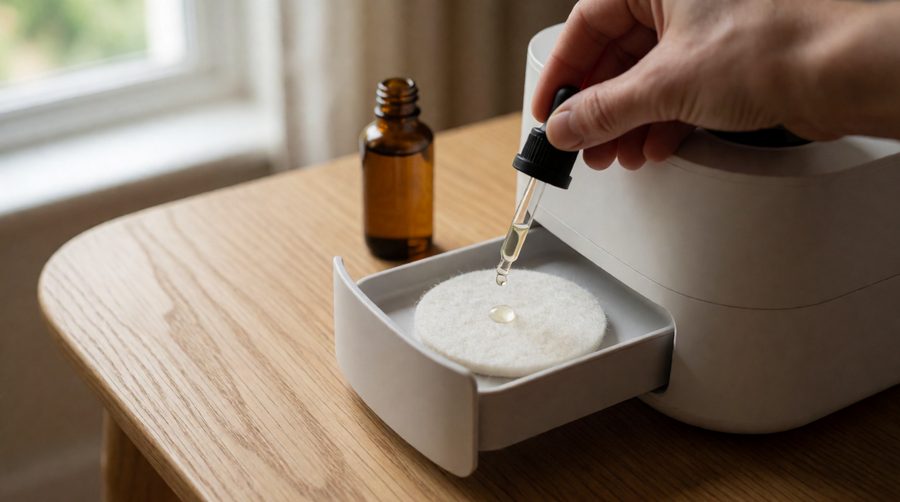
An air purifier diffuser is an air purifier with a built-in aroma feature. The filtering half draws room air through one or more filters, usually a pre-filter for hair and fluff, a HEPA filter for fine particles and often an activated carbon layer for smells and gases. The aroma part is much simpler: a small felt pad, sponge or pull-out box near the air outlet. You add a few drops of essential oil, the clean air blows over the pad and carries the scent into the room.
The Philips PureProtect Go 500 (AC0510/10) is a typical example. It pairs a pre-filter, a HEPA layer and an active carbon layer with an aromatherapy pad, and Philips rates it for rooms up to 25m² with a clean air delivery rate (CADR) of 60m³/h. Levoit's Core Mini uses the same idea with an aroma box at the top, and its manual is clear that oil goes only on the aroma pad, never on the filter or fan, because oil damages the filter and makes it smell.
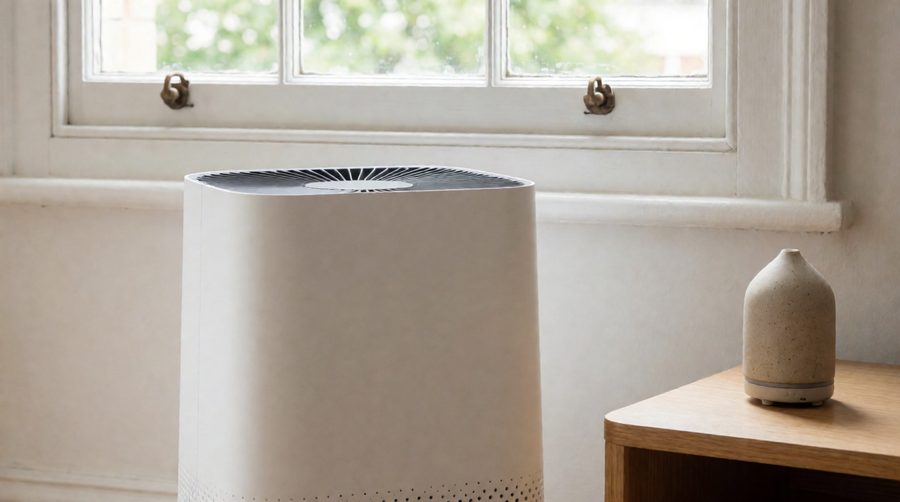
No. This is the most important thing to understand before you buy a scented air purifier. A diffuser adds fragrance to the air; it doesn't take anything out. Essential oils and fragrance oils are made of volatile organic compounds (VOCs), mainly terpenes such as limonene and alpha-pinene. The government's Air Quality Expert Group lists passive diffusers and electric air fresheners among the indoor sources of both in its Defra Indoor Air Quality report (2022).
The same report makes two points worth knowing:
Terpenes also react with ozone, which drifts in from outdoors and comes from some air cleaners. The reaction creates new very fine particles indoors. So a purifier with a scent feature cleans the air with its filter and adds a little back with its pad. With a light hand on the oil the trade-off can be small, but the scent is never part of the cleaning. UK health guidance on indoor VOCs is set out in the UKHSA (formerly PHE) indoor air quality guidelines for VOCs.
Search for an air purifier with diffuser and you will find very different machines under similar names. This is how they compare:
| Type | How it works | Removes particles? | Watch for |
|---|---|---|---|
| HEPA purifier with aroma pad | Fan, HEPA filter, often carbon, plus an oil pad near the outlet | Yes, if it has a true HEPA filter | Carbon soaks up some scent; replacement filters and brand pads |
| Ioniser with aroma pad | Releases charged ions; a fan blows over the pad. No filter | Not really: charged particles settle on surfaces | Ozone; very low airflow |
| "Water air purifier" or purification ball | Fan pushes air over a bowl of water with scented liquid and LED lights | No HEPA filter and usually no CADR figure | Mostly a fan diffuser; clean the water often |
| "Air-purifying" scent diffuser | Ultrasonic, nebulising or fan unit | No | A scent product with a cleaning claim |
| Aroma humidifier (diffuser humidifier) | Adds water vapour, with an oil tray or sponge | No | "Purification" usually means water treatment |
The Boneco P50, for example, is sold in the UK as an air purifier, ioniser and aroma diffuser. It is a small USB-powered unit with an ioniser, two fan speeds and an aroma pad, and no filter to replace. That makes it a pleasant personal scent device for a desk or hotel room, not a substitute for a HEPA filter. Many of the cheaper "air purifier and diffuser in one" listings are like this, so check the filter before anything else.
Which? explains that under EU standards a filter must remove at least 99.95% of particles 0.3 microns across to be called HEPA, and warns that wording such as "HEPA-type" or "HEPA-style" carries no such guarantee. Look for a named grade (H13 or H14) and a replacement filter you can actually buy. The Which? air purifier buying guide also notes that HEPA alone doesn't make a good purifier: at least one HEPA model it tested was bad enough to be named a Don't Buy.
CADR tells you how much filtered air the machine delivers per hour, and it matters more than any scent feature. Small purifiers with aroma pads usually have modest CADRs. Philips, for instance, quotes 25m² for the Go 500 at one air change an hour but just 7m² at 3.5 changes an hour, so size up if the room is big or you want faster cleaning.
Activated carbon is the layer that deals with smells and gases, including VOCs from household products. That is useful, but it will also adsorb some of your fragrance, so the scent from a carbon-equipped purifier tends to be subtle. If you run a separate scent device, keep it away from the air intake.
The Defra report's review of air cleaning technologies found ionisers generate ozone and often leave charged particles on walls and furniture rather than removing them. UV lamps can also produce secondary pollutants. Ozone plus terpenes is exactly the reaction that forms new fine particles, so if your purifier has an ioniser button, consider leaving it off on days you use the aroma pad.
For a bedroom, look for a sleep mode and a quoted dB figure; the Go 500 drops to 12dB on sleep. Which? found purifiers cost between about £6 and £45 a year to run, before filters. Price up the replacement HEPA filter and the brand's aroma pads too, as many models only take their own.
A combined air purifier with diffuser saves space and sockets and gives a gentle background scent. Two separate machines give you more control, and they suit people who want scent occasionally rather than all day:
A lot of products in this category are humidifiers, not purifiers. An aroma humidifier adds water vapour to dry air, which can help in winter when the heating is on, and has a tray or sponge for oil. It doesn't filter anything. Which? recommends aiming for 30-50% relative humidity, so a model with a humidistat or hygrometer is worth having, and it advises emptying and rinsing the tank daily and cleaning the unit at least weekly to stop mineral build-up, bacteria and mould. It also points out that many aroma functions need brand-specific sponges. Read more in the Which? humidifier guide.
Many manufacturers say oil goes only in the tray or on the pad, not in the water tank, so follow your manual.

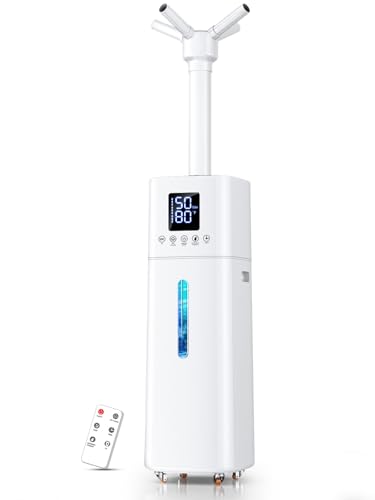
Small ultrasonic units are often labelled "humidifiers" too. They do put out a cool mist, but a few hundred millilitres of water across a whole evening makes little difference to a room's humidity. For longer runs between refills, a 1000ml diffuser is the practical choice.

If you or someone at home has asthma or a lung condition, the filter is the useful bit, and the scent is optional. Asthma + Lung UK advises picking unscented products, or products without added scents, where possible, and opening windows for a couple of minutes throughout the day. Most combined units work fine with the pad left dry, so you can still use one as a plain purifier. A UKHSA review cited by Defra found portable filters lower fine particle (PM2.5) levels by varying amounts, so treat one as a help, not a treatment, and keep using any medicine you have been prescribed.
Pets need care too. Many essential oils, including tea tree, peppermint and citrus, can harm cats. Cats Protection advises keeping cats out of rooms where oils are diffused.
Only the filter part does. A unit with a true HEPA filter and a decent CADR removes dust, pollen and other fine particles; the aroma pad simply adds scent. Units with no filter, such as most ionisers, water bowls and scent diffusers, don't purify in any meaningful way.
No. Only use oil on the aroma pad of a model designed for it. Oil on a HEPA or carbon filter can damage it and leave a lingering smell, as Levoit warns in its manual.
Partly. HEPA filters catch particles, not gases, but activated carbon adsorbs VOCs, including fragrance. Expect a gentler scent with a carbon filter, and keep separate scent sources away from the intake.
A diffuser adds scent, a humidifier adds moisture and an air purifier removes particles (and, with carbon, some gases). Combined units do two of these jobs, and only the filter removes anything from the air.
Fragrance can trigger symptoms in some people, which is why Asthma + Lung UK suggests unscented products where possible. Use the purifier without oil, or check with your GP or asthma nurse first.
As a scent and light feature, perhaps. As an air purifier, there's little to go on: they have no HEPA filter and rarely publish a CADR. Buy one for the look and the fragrance, not for cleaner air.