Our product rankings are based on analysis of thousands of customer reviews, brand reputation, pricing trends, and popularity data. They represent our honest opinion and are intended as a helpful starting point for your research. Some links on this site are affiliate links — if you buy through them, we may earn a small commission at no extra cost to you. This helps us keep the site free and up to date.
A large room diffuser is an electric diffuser powerful enough to scent a space well beyond a single bedroom: an open-plan living, kitchen and dining area, a through lounge, a hallway that runs up to a landing, or a converted barn with a vaulted ceiling. The difference from a standard diffuser isn't just a bigger tank. It is the way the oil is broken up and pushed into the air.
Most compact diffusers are ultrasonic: a vibrating plate turns water and a few drops of oil into a visible mist. That works well in a bedroom, but the scent is diluted and it doesn't travel far. A large diffuser usually uses cold air nebulising (also sold as cold air diffusion or two-fluid atomisation): a pump forces neat oil through a nozzle at pressure, creating micro-fine particles that hang in the air and drift much further. A fan or the natural airflow in your home then carries them around.
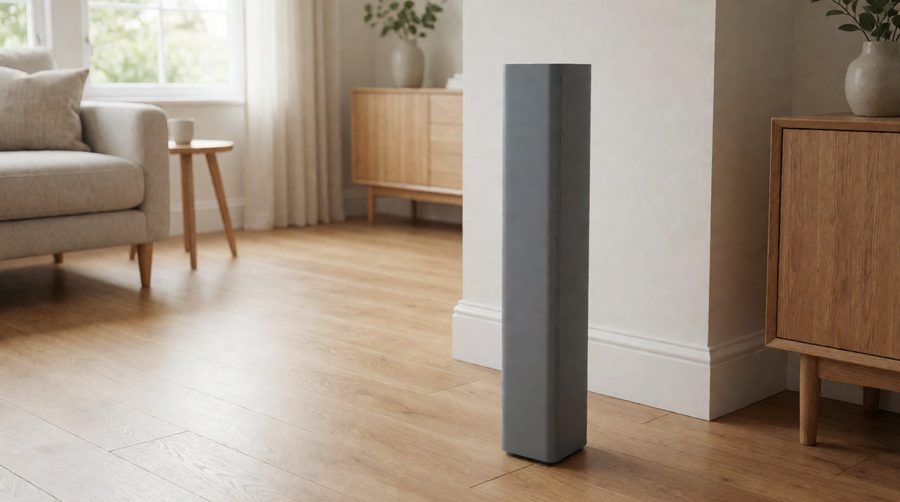
Coverage figures are where most people go wrong, because diffusers are rated in square feet, square metres or cubic metres, and UK homes are measured in metres. Here is how real UK home sizes translate.
So an essential oil diffuser rated for 1,000 square feet is, on paper, a whole-house rating for an average English home. In practice walls, doors and stairs break the air up, so one unit will scent the open-plan floor it sits on, not every bedroom upstairs.
Use these conversions to compare listings fairly:
Manufacturers measure coverage at the highest setting, in an empty space, with the air moving. In a furnished home, our rule of thumb is to look for a rating of around twice the floor area you want to scent, then turn the intensity down. The volumes below use a 2.4 m ceiling; add about 15% for a period home with 2.7 m ceilings.
| Space | Floor area | Approx. sq ft | Volume (2.4 m) | Rating to look for |
|---|---|---|---|---|
| Double bedroom | 12 m² | 130 | 29 m³ | 300-500 sq ft (a standard diffuser) |
| Large lounge | 20-25 m² | 215-270 | 48-60 m³ | 500-1,000 sq ft |
| Open-plan kitchen, dining and living | 40-50 m² | 430-540 | 96-120 m³ | 1,000-1,500 sq ft |
| Ground floor of a family house | 50-60 m² | 540-650 | 120-144 m³ | 1,500-2,000 sq ft |
| Whole average home (via ducting) | 96 m² | 1,033 | 230 m³ | 2,000 sq ft+ or an HVAC scent diffuser |
| Shop, gym, office floor, hotel lobby | 150 m²+ | 1,600+ | 360 m³+ | A commercial scent machine |
| Type | How it works | Strength in big spaces | Best for |
|---|---|---|---|
| Large ultrasonic (500-1,000ml tank) | Water plus a few drops of oil, misted by a vibrating plate | Gentle; adds humidity | Lounges and bedrooms where you want visible mist |
| Extra large reed diffuser (1-2.2 litres) | Reeds wick fragrance oil into the air, no power | Soft background scent | Hallways and entrances, decor |
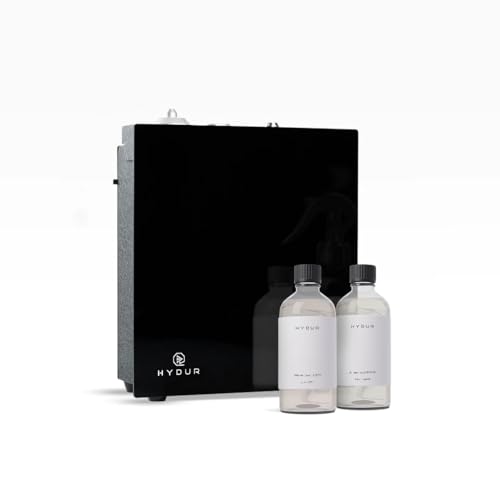
| Waterless cold air diffuser | Pump and nozzle turn neat oil into a dry vapour | Strong, even, controllable | Open-plan rooms up to whole floors |
| Dual or multiple nozzle | Two bottles on separate nozzles | As strong as a single-nozzle unit, with two scents | Switching scents by time of day |
| HVAC-connected | Feeds scent into ducting or air handling | Strongest, most even | Whole homes with ducted air, commercial spaces |
A large electric diffuser with a 500ml or 1,000ml water tank runs for longer, but it doesn't throw scent much further. MUJI, for example, rates its Large Electric Aroma Diffuser (a 350ml ultrasonic model) for spaces up to 30 m². That's a generous lounge, not an open-plan floor. If you love the mist, look at our 1000ml diffusers for the longest run times.
Extra large reed diffusers of 2,000-2,200ml look striking on a hall console and give a steady background scent for months, with nothing to switch on. You can strengthen them by adding reeds, but they can't be scheduled or turned up, and in a draughty hallway the oil evaporates faster.
The best diffuser for a large room is usually a waterless cold air model. Because nothing dilutes the oil, a little goes a long way, and intensity is set by how long the nozzle runs in each cycle (for example 10 seconds on, 120 seconds off). Look for adjustable cycles, a lockable bottle and a large reservoir. Our cold air diffusers and nebulizing diffusers work on the same principle.
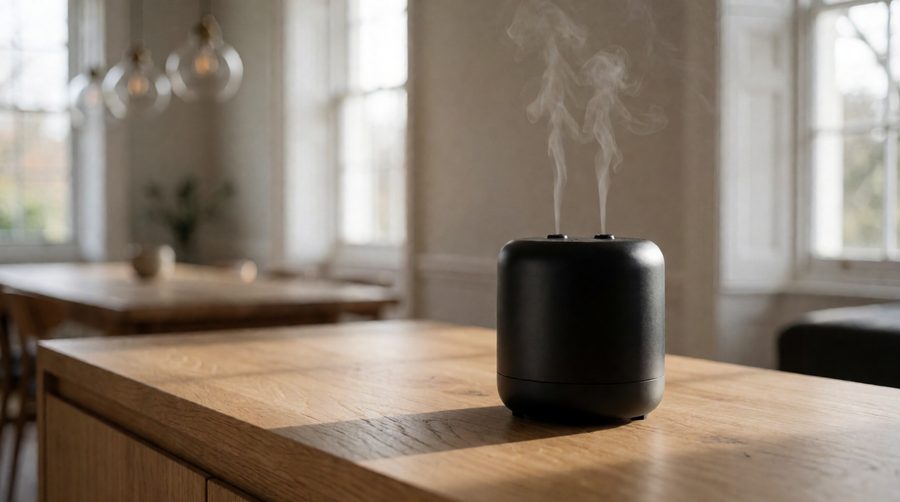
Dual and multiple nozzle diffusers hold two bottles, so you can run a fresh citrus blend in the morning and something warmer in the evening without swapping oils. Check what the second nozzle actually does before buying. On many home models the nozzles take turns rather than running together, so you get two scents, not double the coverage. If you want more output, buy a higher-rated single unit, or two diffusers at opposite ends of the space.

Work out your floor area in m², convert to sq ft, and pick a rating with headroom. If a listing quotes both m² and m³, divide the volume by the area. The answer is the ceiling height the maker assumed, which shows how realistic the claim is.
Capacity sets how often you refill, not how far the scent travels. A 300ml bottle suits a lounge; 1,000-1,500ml makes sense when the diffuser runs most of the day. Oil use varies widely with the cycle you set, so compare the quoted ml per hour where a brand gives it.
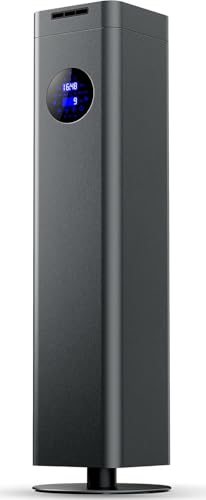
App control matters more on a large diffuser, because you'll want it running only when people are around. A smart diffuser with Wi-Fi lets you change settings away from home, and with a diffuser with timer schedules you can start the scent before you get back.
Pumps give off a soft hum, usually quoted at 35-45dB. That's lost in a busy kitchen but noticeable in a quiet lounge in the evening, so check the figure. Our quiet diffusers list the lowest-noise models.
Many large diffusers can stand on a shelf, hang on a wall or connect to ducting, so check the fittings are in the box.
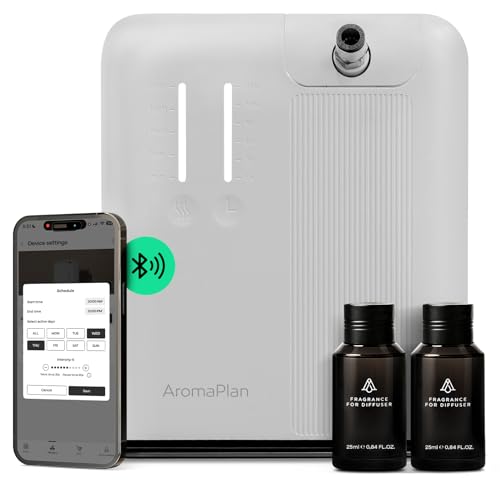
Once you're past a single open-plan floor, one large room diffuser on its own won't reach every corner, so connect a large diffuser to ducting or air handling instead. An HVAC scent diffuser feeds fragrance into the air system so the whole house gets the same level. For shops, gyms, offices and receptions, a commercial scent machine is built for long daily run times and big volumes. Our hotel scent diffuser range recreates hotel lobby fragrances at home, and the ScentAir diffuser page covers one of the best known commercial scent brands.
Use the oils your diffuser is designed for. Many waterless models want thin, pure essential oils or their own diffuser oils, and thick oils or carrier oils can block the nozzle. Our essential oil sets are an easy way to find a blend you like before buying a large bottle. Fragrance adds to indoor air, so keep the space ventilated and the intensity sensible. Asthma + Lung UK has advice on scented products if anyone at home has a lung condition. Some essential oils are harmful to cats, so read Cats Protection on essential oils and give pets a scent-free area.
Measure the floor area, convert to square feet (multiply m² by 10.76), and choose a diffuser rated for about twice that. For a 45 m² open-plan space (about 480 sq ft), a model rated 1,000-1,500 sq ft is a sensible starting point.
It will scent about 93 m² of open space, close to the average English home, but internal walls and closed doors stop it reaching every room. Treat it as one floor, or connect it to ducting.
Usually, yes. Waterless cold air diffusers use neat oil and spread it further than ultrasonic mist, and many have larger bottles and app schedules. Ultrasonic models suit you better if you want visible mist and a little humidity.
Extra large reed diffusers give a pleasant background scent in hallways and entrances, but they can't be turned up or scheduled. For a strong, even scent across an open-plan space, an electric diffuser does the job better.
One well-rated diffuser per open floor is usually enough. Add a second if the space is long, L-shaped or split by doors, or if you want different scents in different areas.
You can, but you'll use more oil and the scent becomes less noticeable over time. Most people run an intermittent cycle on a schedule, such as an hour in the morning and a few hours in the evening, with auto shut-off when the bottle runs low.